Производители голеня
Natural rubber is a vital element in tire production. Any fluctuations in its price directly affect tire manufacturers' costs, and the rhythm of production and sales in the auto parts supply chain also depends on it. According to the latest market data as of July 13, the global natural rubber market is generally characterized by a somewhat stronger but volatile international market, while domestic spot prices followed with a slight increase.
Several factors, including the rainy season in Southeast Asia, changes in stock levels at domestic ports, and seasonal changes in the tire industry, have led to a slight divergence between domestic and international rubber prices. However, there has been no significant unilateral surge or drop; the overall market remains in a range where "bulls" and "bears" are in a tug-of-war.

From the perspective of the international market, raw material prices in major production regions of Southeast Asia have recently steadily recovered, laying the foundation for global rubber prices. Thailand, as the world's largest rubber producer, is witnessing a prolonged recovery in raw material purchase prices.
As of July 10, the price of field latex was 79.3 baht/kg, 4.3 baht/kg higher than the previous period, and the price of rubber crumbs was 67.5 baht/kg, up by 2 baht/kg. Excessive rainfall in rubber-producing areas during this period made outdoor rubber tapping difficult, reducing production efficiency and shrinking supply in the spot market, which directly led to an increase in raw material prices.
Futures markets followed this trend: the main TSR20 contract on the Singapore Exchange confidently held above 216 cents/kg. Following the rise in oil prices, synthetic rubber production costs increased, leading to higher prices. Downstream buyers showed increased willingness to purchase natural rubber, which offers better cost-effectiveness.
Combined with the reduction of short positions in futures, international rubber prices recovered from a two-month low. However, it should be noted that production areas in Southeast Asia are gradually entering a recovery period, and the supply of new rubber will steadily increase. Additionally, the global tire industry is in its traditional off-season, leading to insufficient market demand and limited potential for rubber price growth. A sustained upward trend in the short term is unlikely.
The domestic natural rubber market is generally stable with a slight upward trend. Futures prices and spot prices are closely tied to industry realities, with relatively mild fluctuations. In the spot market, as of July 9, prices in Yunnan and Hainan, the two main production areas, remained stable. The reference price for latex in Yunnan was 16,000 yuan/ton, and the reference price for fresh latex in Hainan was 16,700 yuan/ton.
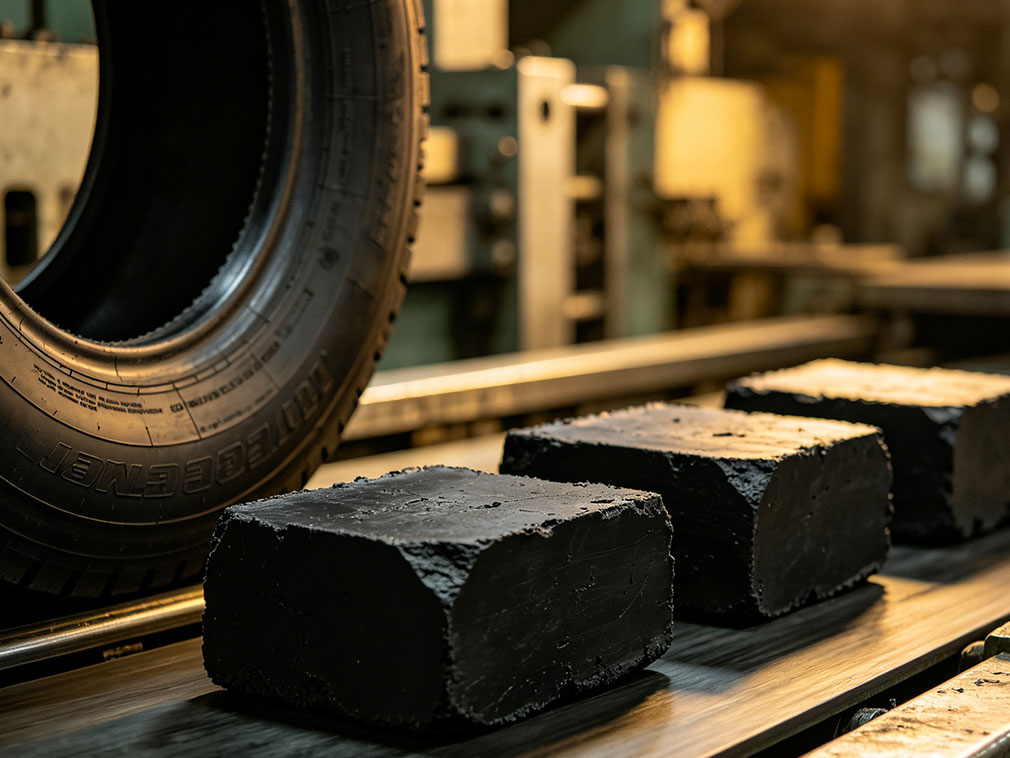
Recent stable weather in domestic rubber production areas ensured normal rubber tapping and production, leading to sufficient raw material supply and no significant gap between supply and demand. In the distribution sector, the spot price of state-owned full latex rubber was 17,100 yuan/ton, 400 yuan/ton higher than the previous week.
The main reason for the price increase is the continued decline in stock levels at domestic ports and the gradual improvement in spot market circulation. On the futures market, the main contract on the Shanghai Rubber Exchange rose by 0.9% for the week, and the main TSR20 contract rose by 1.8% for the week.
The market followed the upward trend of the international market, but the growth was less significant than on the international market. The price gap between domestic and international markets remained within a reasonable range, and the overall market performance was stable.
In terms of stock levels and circulation in the spot market, the domestic supply-demand structure for natural rubber continues to recover. As of July 5, the total stock of natural rubber at Qingdao Port was 675,200 tons, 15,900 tons less than the previous period. Stocks in both bonded and general trade categories decreased simultaneously.
Given that rubber prices in the previous period were at relatively low levels, most tire companies took the opportunity to replenish their inventories as needed, leading to a significant increase in shipments and effectively reducing previously accumulated stocks.
Meanwhile, the number of warehouse receipts for natural rubber on the Shanghai Futures Exchange continued to decline slightly, and available spot market resources gradually decreased. This trend provided strong support for domestic rubber prices, offsetting the negative impact of off-season demand in the tire industry, and the fundamental situation stabilized.
Demand for tires at the downstream level is currently a key factor limiting significant price fluctuations for rubber. July is traditionally a slow season for the tire market, and as many domestic tire companies recently conducted equipment maintenance and reduced operating rates for production lines, as of July 9, the overall capacity utilization rate for both all-steel and semi-steel tire companies slightly declined. End factories are adhering to cautious procurement strategies, mainly buying as needed and replenishing inventories in small batches, leading to low overall market activity. However, positive factors are slowly accumulating.
Currently, most tire factories are completing maintenance, and the operating rate of production lines is expected to gradually recover. At the same time, the domestic heavy truck market continues to show year-on-year growth in sales, and end-user demand is steadily recovering, laying the foundation for future rubber price growth. Additionally, with rising oil prices, the price advantage of synthetic rubber as a substitute for natural rubber is gradually diminishing, which in turn increases interest in purchasing natural rubber.
Overall, the domestic natural rubber market as of July 13 showed clear signs of range-bound trading, supported by costs and constrained by demand. International prices maintained a relatively strong trend due to weather conditions in Southeast Asia and rising raw material costs; domestic prices rose slightly due to declining port stocks, but weak end-user demand in the off-season limited further growth.
In the short term, both domestic and international rubber prices are likely to continue fluctuating within a range. Several key factors require close attention: weather changes in production regions of Southeast Asia, progress in the recovery of new rubber supplies, the extent of recovery in domestic tire manufacturing operations, and fluctuations in overall market sentiment. Any minor changes in key supply-demand indicators will directly determine the direction of rubber prices in the next stage.
-
Экспорт зеленой техники вырос на 21,7% (19 августа)5295
-
Немецкие полуприцепы достигли €40 тыс. в соответствии с правилами ЕС (19 августа)6392
-
Китайские электрические грузовики: более 16,000 экспортировано за 4 месяца (19 августа)6972
-
Цены на шины растут вслед за увеличением расходов (18 августа)6504
-
Будет ли зарядка электромобилей проще к 2030 году? (18 августа)6871